What I figured out
Insight 01 · The scoreboard
We were optimising for the wrong conversion.
Campaigns were judged on cost per trial. But a trial that never renews costs money. Some "cheapest" ads were bringing in customers who didn’t stay.
So: Every ad is now judged on cost per paid renewal, and the Meta algorithm is fed the conversion we actually want.
Insight 02 · The hook
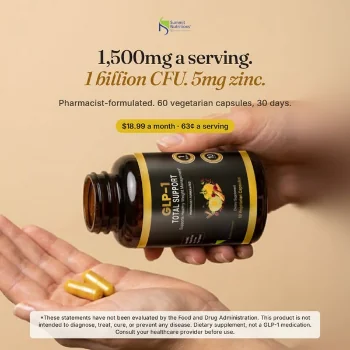
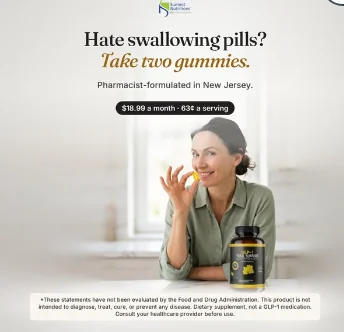
Competitors lead with the problem. We led with the price.
I used ad longevity in the Meta Ad Library as a proxy for performance (brands keep paying for ads that work) and studied 7 competitors. Their long-runners open with a symptom the customer feels. Every one of ours opened with an offer.
So: Six single-variable test briefs, each changing one thing, each with a written condition that would prove the idea wrong. Tests designed to teach us something, not just to find a winner.
Insight 03 · Noise
Most of the day-to-day "optimisation" was noise.
With confidence intervals on each campaign’s cost per order, the middle 9 of 11 campaigns overlapped completely.
So: Stop reshuffling budget between look-alike campaigns. The account became a Scale campaign for proven ads and a Test campaign with weekly batches and written pause and graduate rules.
Insight 04 · Creative anatomy
The account’s own data had a creative rule in it.
Comparing our ads, the number of distinct proof elements in a creative (label, ingredient, result, reviewer) tracked with better cost per purchase.
So: That became a brief rule: every new concept carries enough proof to stand on its own, instead of relying on taste.
Insight 05 · The funnel
Some of the "ad problem" wasn’t in the ads.
Auditing where ads sent people, I found a price that didn’t match between pages, a wrong servings count, and an unsupported certification claim.
So: Those got fixed before spend scaled. Great ads can’t rescue a landing page that contradicts them.